Report | January 24, 2025
Why transparency matters: Exposing EU ownership of high-risk fishing vessels in Guinea-Bissau
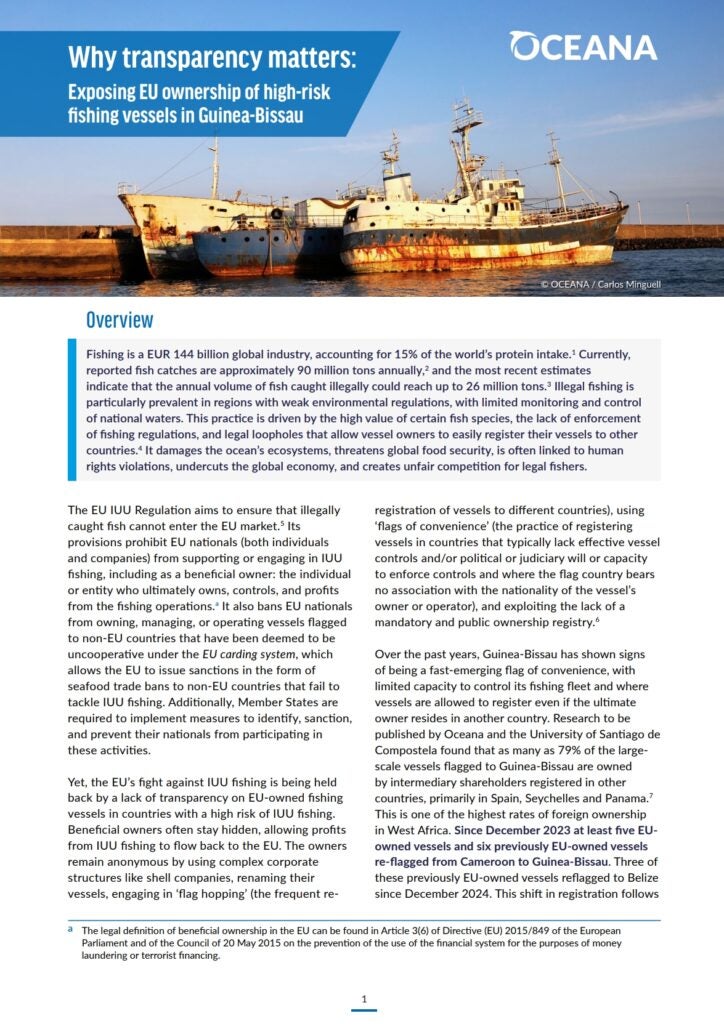
Fishing is a EUR 144 billion global industry, accounting for 15% of the world’s protein intake. Currently, reported fish catches are approximately 90 million tons annually, and the most recent estimates indicate that the annual volume of fish caught illegally could reach up to 26 million tons. Illegal fishing is particularly prevalent in regions with weak environmental regulations, with limited monitoring and control of national waters. This practice is driven by the high value of certain fish species, the lack of enforcement of fishing regulations, and legal loopholes that allow vessel owners to easily register their vessels to other countries. It damages the ocean’s ecosystems, threatens global food security, is often linked to human rights violations, undercuts the global economy, and creates unfair competition for legal fishers.