Report | October 11, 2016
2016: North Sea expedition: Towards a stronger MPA network
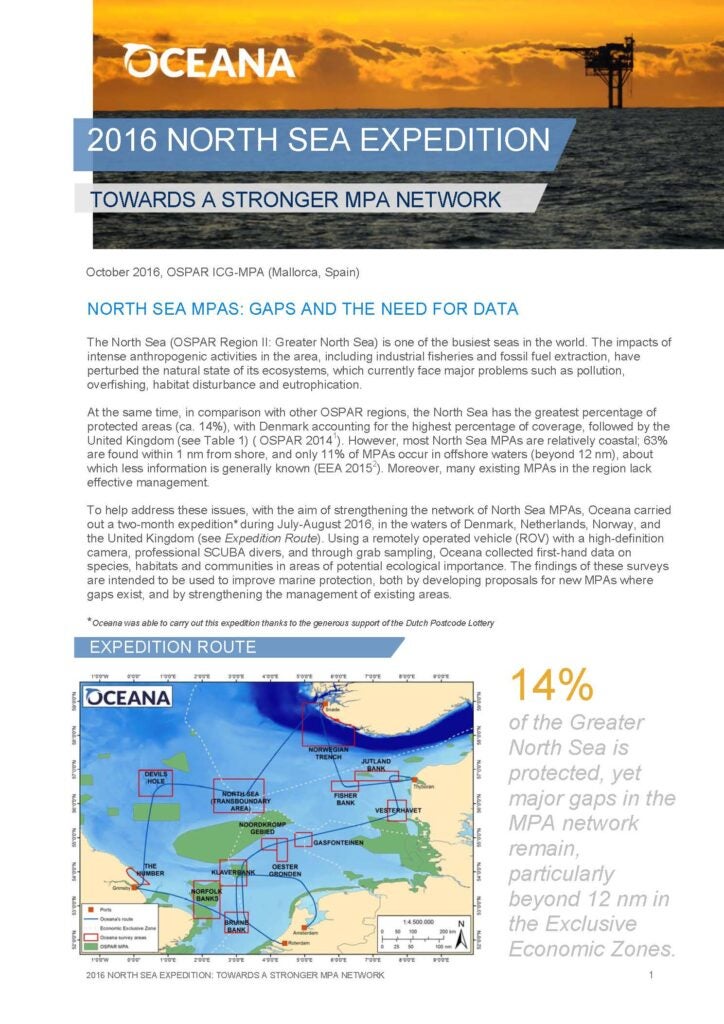
The North Sea (OSPAR Region II: Greater North Sea) is one of the busiest seas in the world. The impacts of intense anthropogenic activities in the area, including industrial fisheries and fossil fuel extraction, have perturbed the natural state of its ecosystems, which currently face major problems such as pollution, overfishing, habitat disturbance and eutrophication.
To help address these issues, with the aim of strengthening the network of North Sea MPAs, Oceana carried out a two-month expedition* during July-August 2016, in the waters of Denmark, Netherlands, Norway, and the United Kingdom.
A total of 73 ROV dives, 15 SCUBA dives, and 187 grab samples were done within thirteen study areas, down to a maximum depth of 234 m. In total, Oceana documented roughly 700 species across a diverse range of habitats.